Vacuum filters are used in dewatering applications to separate water from solid materials through suction. These filters use a vacuum to draw liquid through a porous filter medium, leaving solids behind.
Vacuum filters are popular in industries like mining, chemical processing, and wastewater treatment, where they are used to dewater fine particle suspensions and slurries efficiently.
How Vacuum Filters Work
A vacuum filter typically consists of a rotating drum or belt covered by a filter cloth and a vacuum system. The dewatering process involves the following stages:
- Formation of the Filter Cake:
A slurry of solid and liquid is fed onto the filter cloth. As the vacuum draws liquid through the filter, a layer of solids begins to build up on the cloth, forming what is known as the filter cake. - Drying Zone:
As the drum or belt rotates, the vacuum continues to remove more water from the filter cake, increasing its dryness. - Cake Discharge:
After dewatering, the vacuum is released, and the filter cake is scraped or discharged from the surface of the drum or belt.
Types of Vacuum Filters
- Rotary Drum Vacuum Filter:
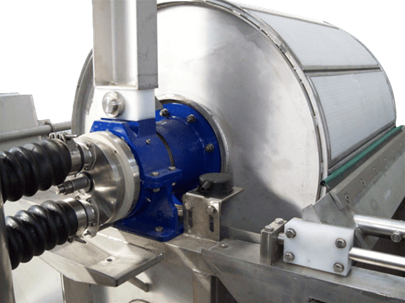
This filter features a rotating drum that partially submerges in the slurry tank. As the drum turns, it forms a filter cake on its surface, which is then dried and discharged. Rotary drum filters are particularly suited for continuous, high-capacity dewatering. - Horizontal Belt Vacuum Filter:
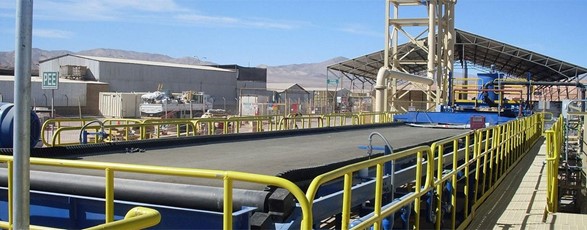
In this filter, the slurry is applied to a horizontal moving belt under vacuum. It allows for a longer drying zone and can handle a variety of slurries, making it useful in industries like mining and chemical processing.
Key Applications
- Mining:
Vacuum filters are extensively used to dewater mineral concentrates and tailings, reducing the volume of waste for disposal. - Chemical Processing:
They are used to separate solid byproducts from liquid in chemical reactions, producing a high-quality filtrate and a dry solid product. - Wastewater Treatment:
Vacuum filters help dewater sludge in municipal and industrial wastewater facilities, resulting in a more manageable and less costly material for disposal.
Advantages
- Continuous Operation:
Vacuum filters provide continuous dewatering, making them ideal for high-throughput applications. - Effective with Fine Particles:
They are capable of handling slurries with very fine particles, which makes them highly useful in industries requiring fine filtration. - Low Energy Costs:
Vacuum filters are energy-efficient relative to other methods, as they rely on vacuum suction rather than high-speed rotation or pressure. - Customizable:
They are available in various sizes and configurations, making them adaptable to different materials and processing requirements.
Limitations
- Limited Solids Recovery:
Vacuum filters are less effective with very thick slurries or materials with low permeability, as they can clog the filter media. - Requires Frequent Cleaning:
The filter cloths or media need regular cleaning to prevent clogging, especially with sticky or fibrous sludges. - Initial Cost:
The setup costs for vacuum filters can be relatively high, particularly for larger or more complex configurations.
Vacuum filters are valued in dewatering applications for their continuous operation, energy efficiency, and effectiveness with fine particles. While they require routine maintenance and may have limitations with certain materials, their adaptability and throughput make them a popular choice in large-scale dewatering processes.